Furniture platform
One of Europe's largest furniture manufacturers sells turnkey — from the order plan to delivery and installation. I designed both sides of that operation: the internal offer-and-order tooling, and 30+ client storefronts across Europe — every one a different brand, model and market.
Client and store names are withheld under NDA, so this case covers the domain, my role, the process and relative outcomes only. If you'd like to go deeper on the approach and the decisions behind it, get in touch.
The context
The manufacturer is one of Europe's largest: fitted kitchens plus living, bathroom and utility furniture, sold in 90+ countries through a dealer network spanning the continent.
Their model is turnkey — a customer buys not a cabinet but a finished plan: designed, ordered, manufactured, delivered, installed. Around that model lives an ecosystem: internal tools that move every order from plan to installation, and dozens of dealer stores and salons — online and offline — across Europe.
- Internal — offer & order creation, delivery tracking, mail management, delivery-and-installation coordination.
- External — 30+ client storefronts: different brands, different countries, different business models.
- One design team behind both — us.
My role
Senior UX/UI Designer across the whole ecosystem: the internal offer-and-order application and the storefront programme.
Requirements with BAs and engineers, redesigns of existing functionality, new features and flows, high-fidelity prototypes for stakeholder demos, accessibility practices, and mentoring junior designers.
- Internal product design — the offer-and-order backbone.
- 30+ storefront launches — the customer-facing side.
- Design system & re-usable libraries.
- Prototypes that sped up client approval.
- Mentoring junior designers.
Thirty storefronts, one library. The craft is a system that launches a new branded store fast — without every store looking like a template.
The internal tool
An application for the manufacturer's kitchen designers and dealers: create and save offers and orders (plans), track deliveries, manage mail and correspondence, and coordinate delivery-and-installation.
The operational backbone — from plan to installed product.
- Offer & order (plan) creation and management.
- Delivery tracking.
- Mail management & correspondence.
- Delivery + installation coordination.
- Calendars and activity planning.
30+ storefronts
Every client came with their own brand, their own market and their own sales model — the same product range, sold thirty different ways.
Beyond the stores — a trade-fair product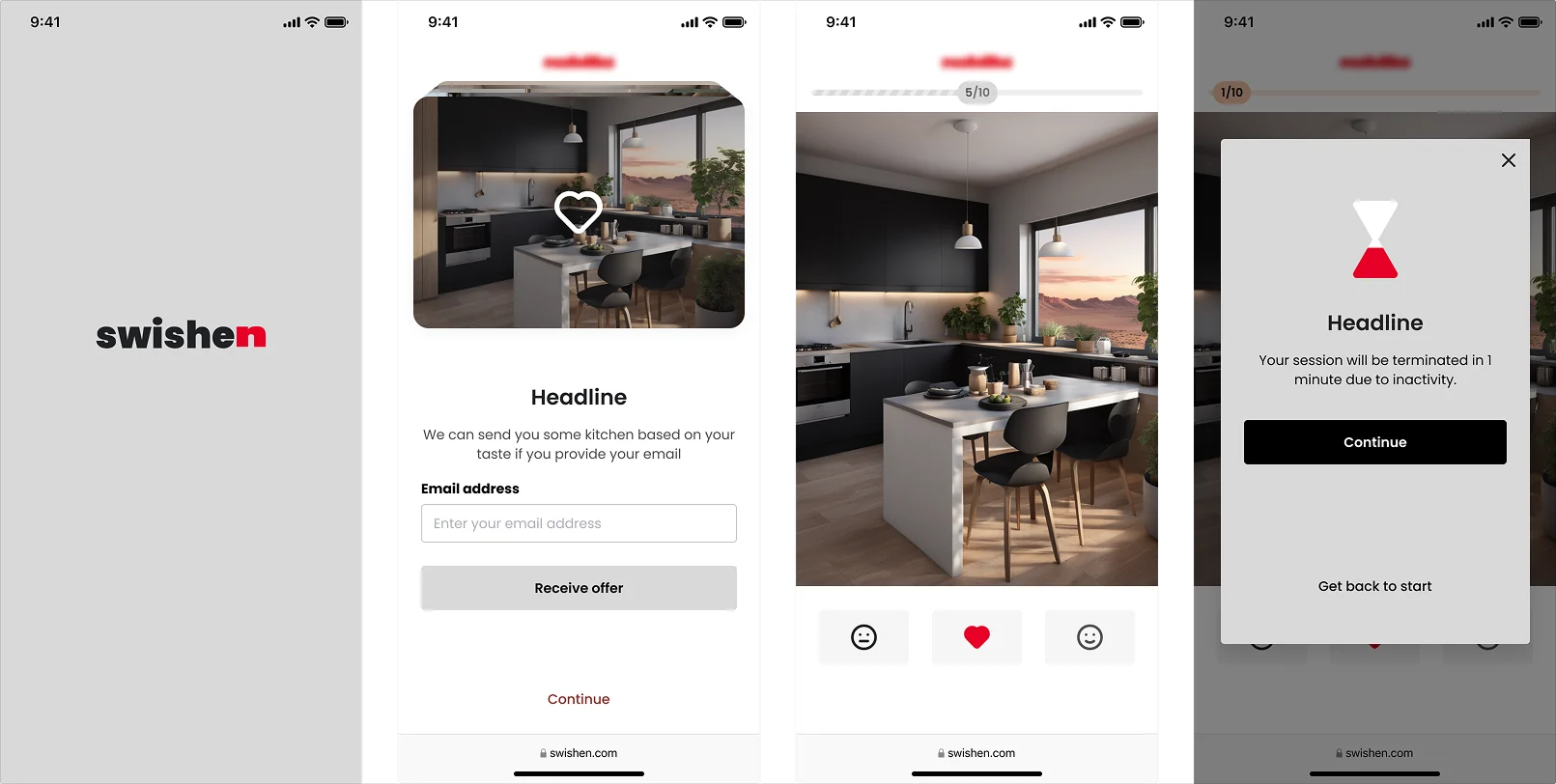
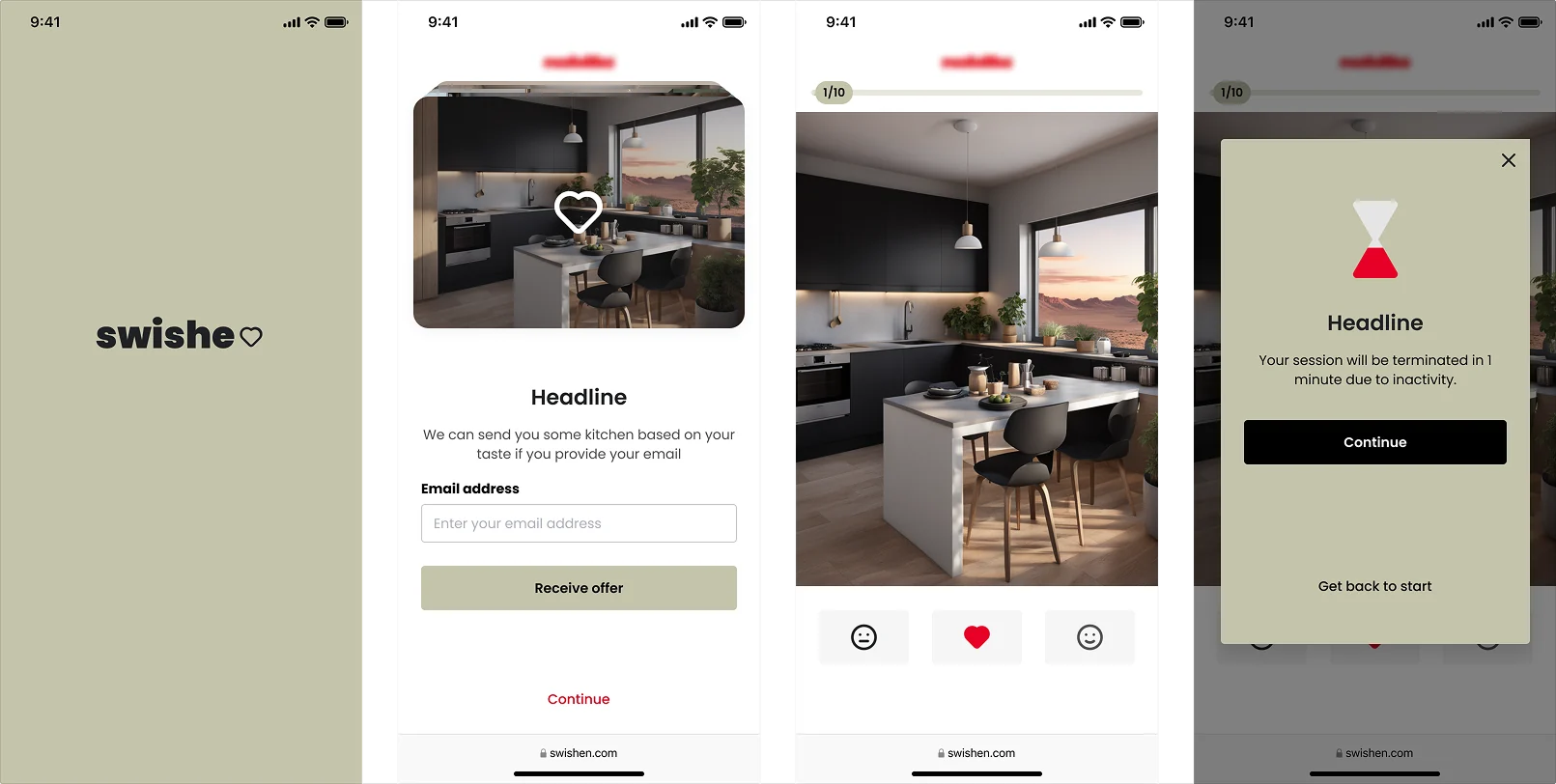
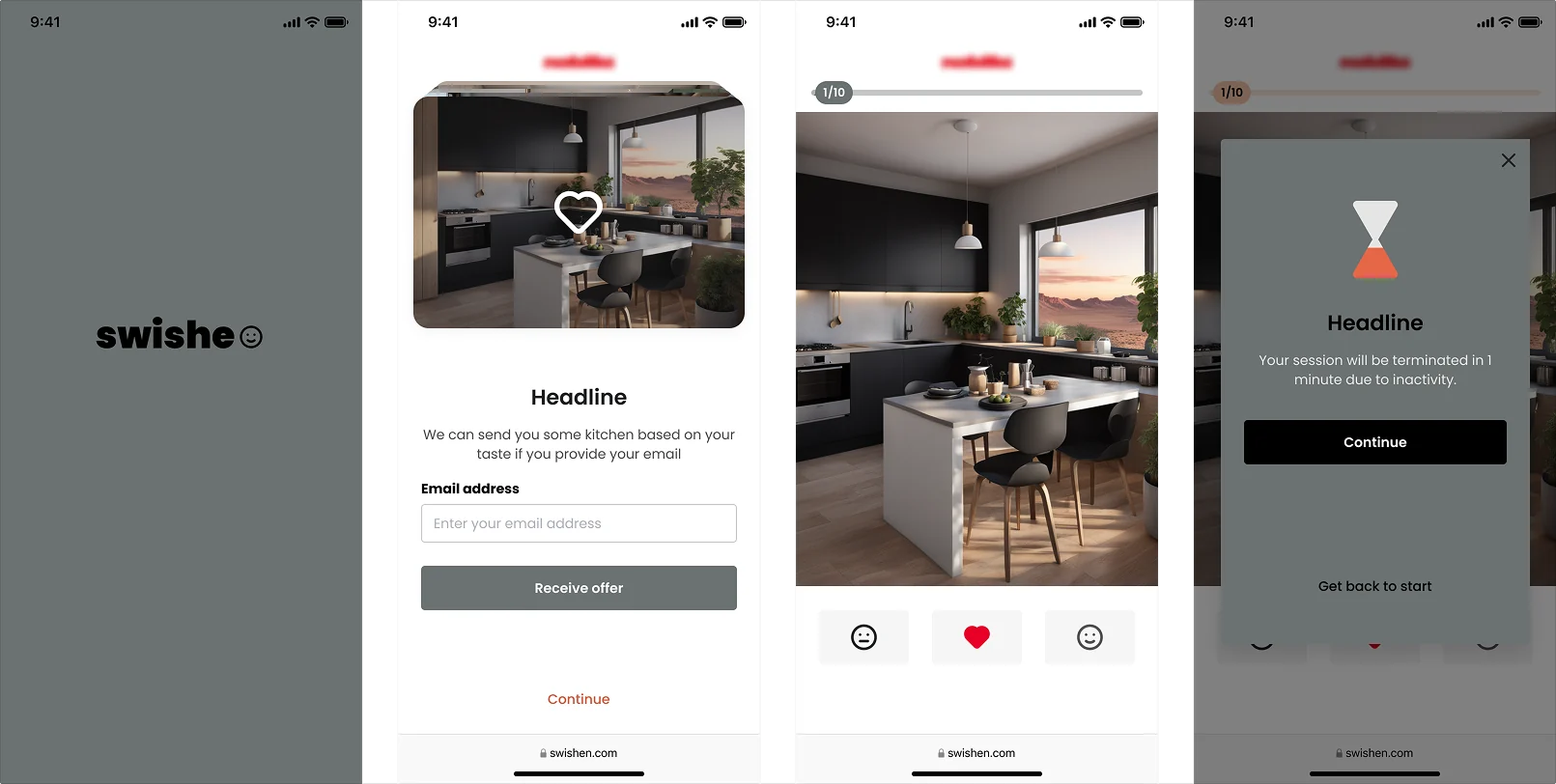
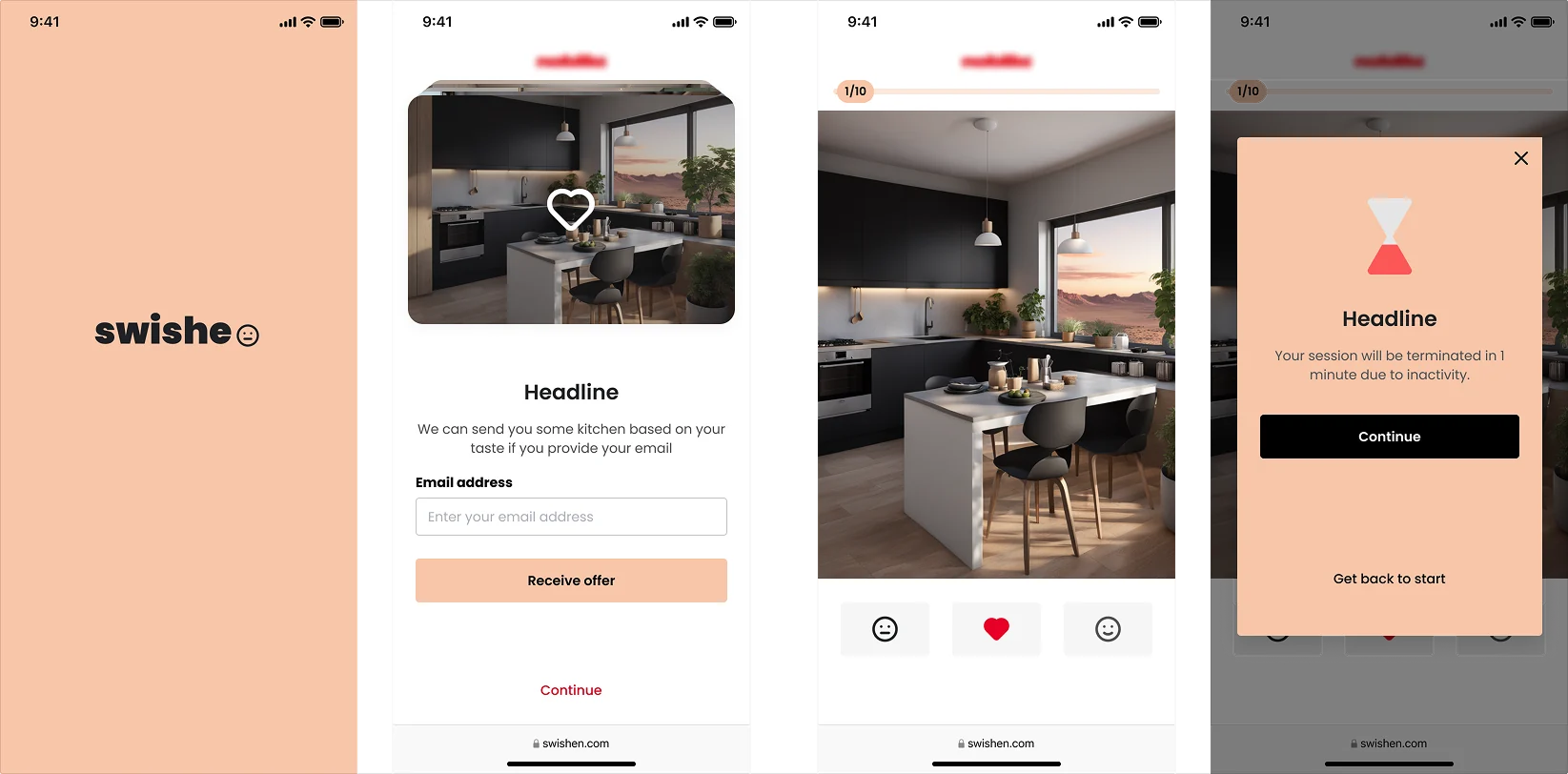
A kitchen-matching test built for an international trade fair: a visitor rates generated kitchens, narrows down to a real model, and gets matching options with prices by email. Shown in four brand themes — the same screens re-skinned rather than redrawn. Open the clickable prototype →
One library, many identities
The economics of 30+ launches only work with re-use.
I developed and maintained the design system — UI kits, palettes, text styles — and adapted existing libraries so a new branded store could launch quickly without losing its identity. Same discipline as white-label, applied at dealer-network scale.
- Re-usable component libraries.
- Per-brand theming (palette, type, imagery).
- Consistent UX patterns across all stores.
- Accessibility best practices baked in.
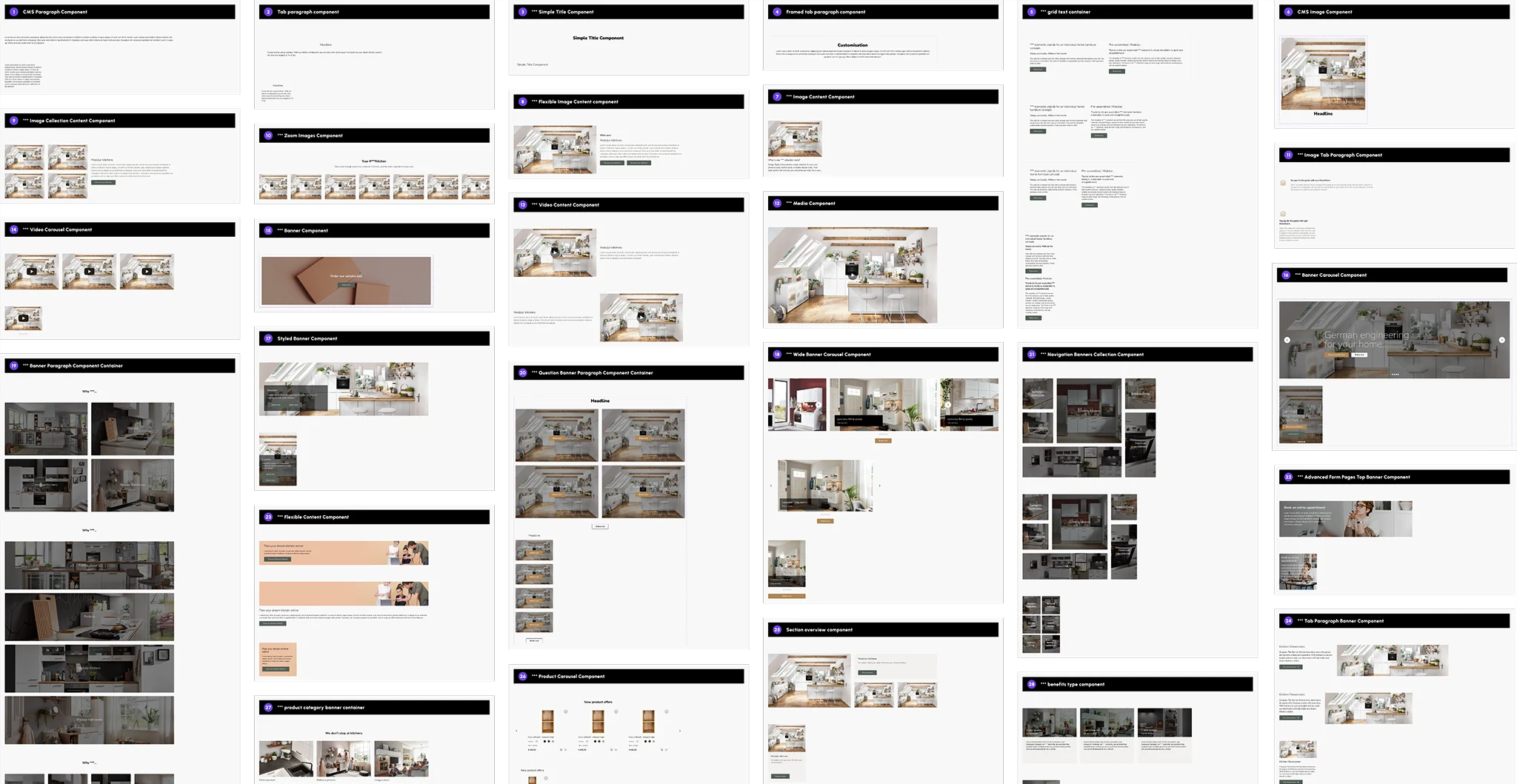
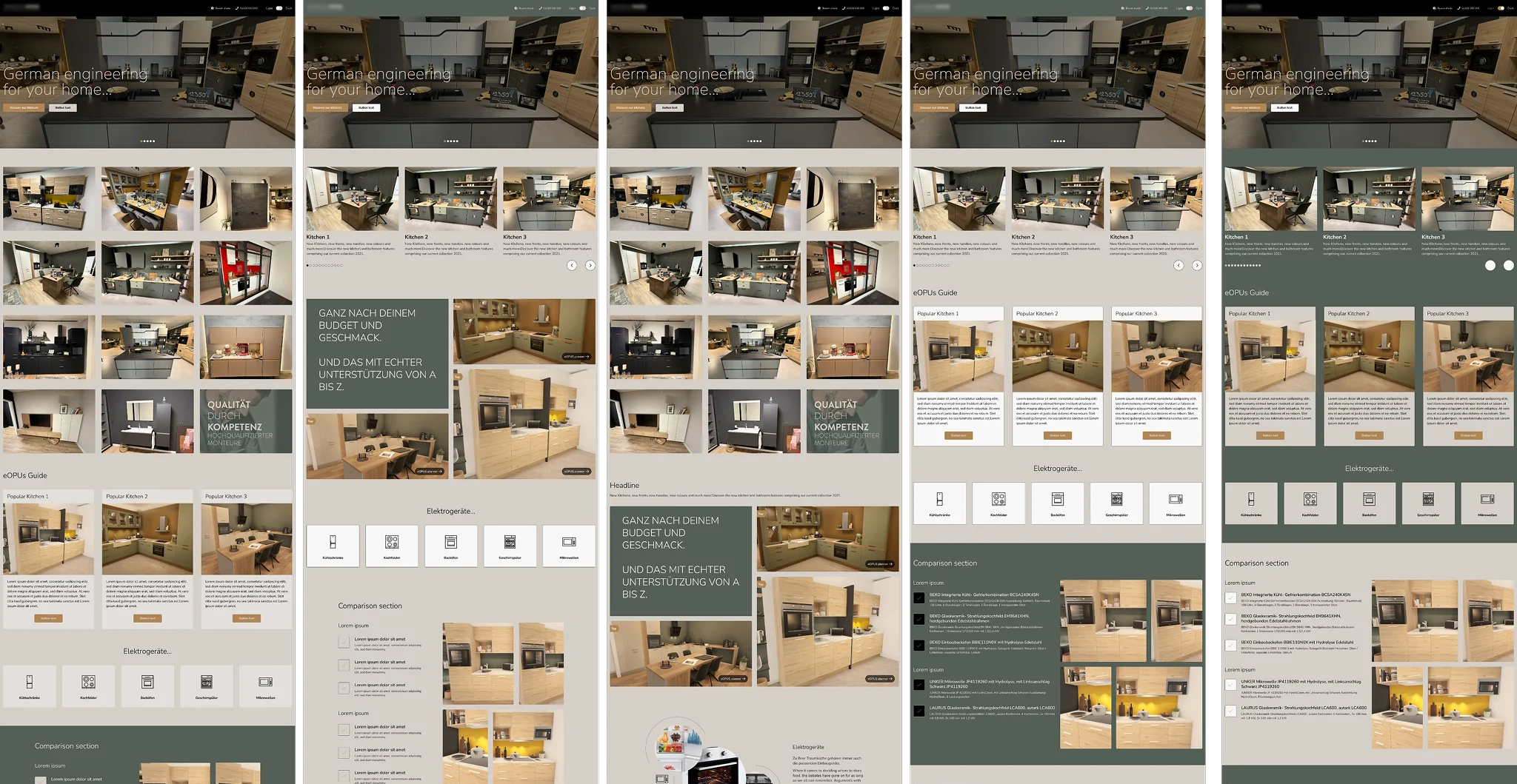
The component library, and five landing pages assembled from it. With the library and mode variables in place, several landing variants could be put together for a client in a very short time — different type, colours and composition on the same components.
Outcomes
This project is where multi-brand systems thinking became my default: one library, many identities, fast launches.
It also taught the value of designing the operational backstage — the best storefront fails if the order behind it can't reach the kitchen, the truck and the installer.