Design

Natallia Lisouskaya
Senior Product Designer · Hands-on Design Lead
End-to-end product design for complex products — B2B, B2C and SaaS, web and mobile.
Portfolio
Natallia Lisouskaya — Senior Product Designer

Senior Product Designer with 8+ years of experience designing complex B2B, B2B2B, B2C and SaaS products. I take ownership of product problems end to end: user research and discovery, concept and UI design, prototyping and usability testing, implementation with engineering, and continuous improvement on feedback and analytics after release.

I've worked across enterprise platforms, data-heavy dashboards, telematics, IoT products, industrial software, marketplaces, and web and mobile applications, in close collaboration with product managers, business analysts and engineering teams. Every domain comes with its own users, constraints and economics, so I adapt the approach rather than run a fixed process. The more complex the product, the more interesting it gets.

What connects them is scalable product architecture: turning product decisions into patterns that hold across brands, markets and releases. Scalable design systems in Figma, aligned with Storybook, are the mechanism rather than the outcome — they keep quality and delivery moving together as a product grows, including when that means auditing and rebuilding a dated platform.

01

Selected Projects

More selected work

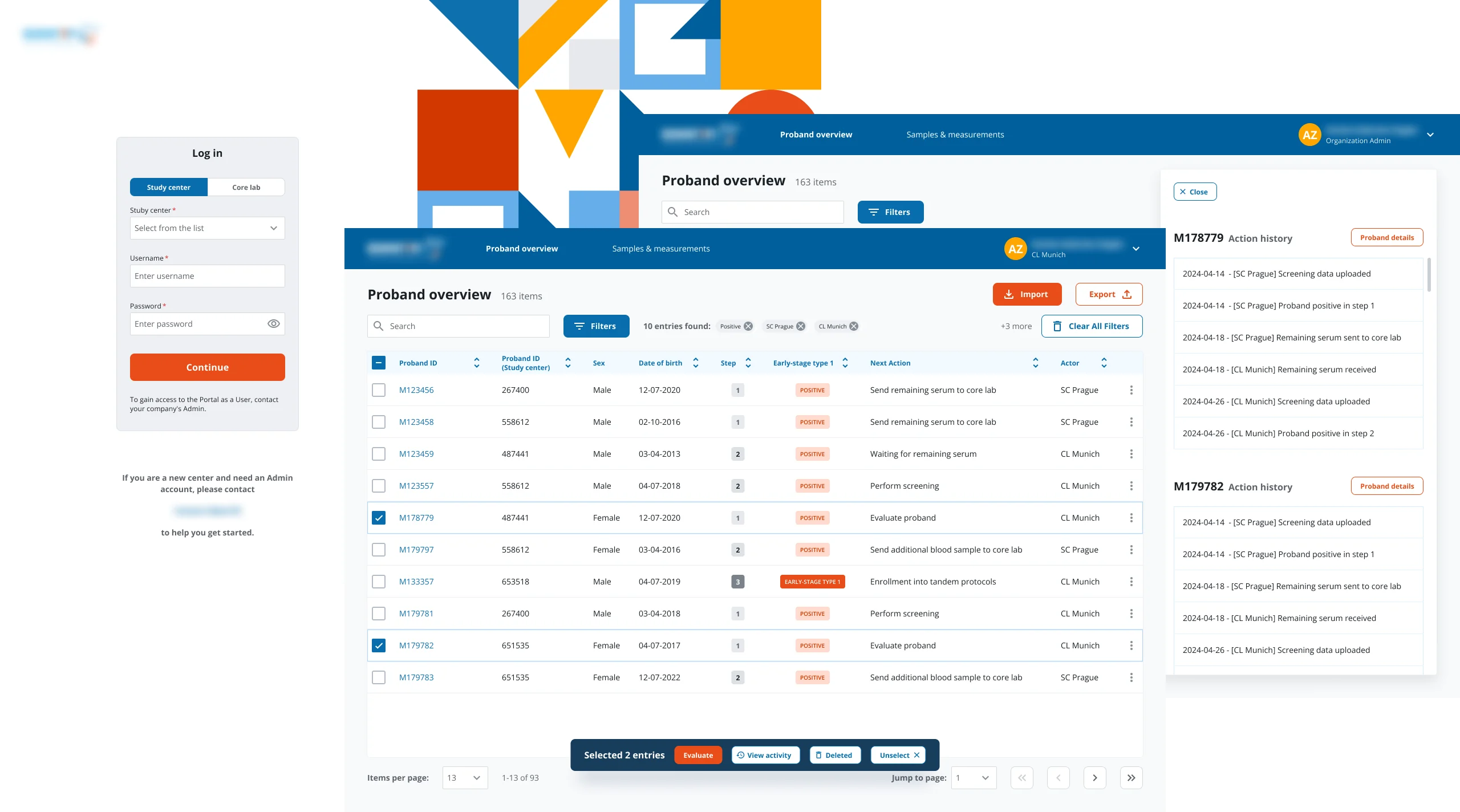
Antibody-screening data platform — multi-centre clinical workflow

Digitalization and workflow automation for a European research initiative that detects the earliest, pre-clinical stage of Type 1 diabetes in children — a screening programme running across more than a dozen European countries, delivered by a consortium of dozens of partner organizations and reaching hundreds of thousands of children.

The platform centralizes screening data from every participating study center and drives the core workflow: data and samples move through a managed pipeline — routing, tracking and confirmatory testing by core labs — instead of living in scattered spreadsheets and email. It replaces a fragmented, multi-site process with one guided flow a coordinator can follow without losing track of a case.

Responsibilities
  • Domain and stakeholder research in a regulated clinical context — mapping how samples, data and decisions actually travel between sites, then designing the pipeline that replaces it.
  • End-to-end design ownership and data-heavy interface design — proband overviews, multi-criteria filtering, bulk actions, sample tracking and full action history, built for accuracy and auditability rather than visual novelty.
  • UI kit and component library from scratch — tables, filters, status indicators, forms and navigation, all defined as reusable components, with semantic colour coding for "positive" results that are not actually positive but require attention and further action.
Bioreactor control software — dashboard with process charts

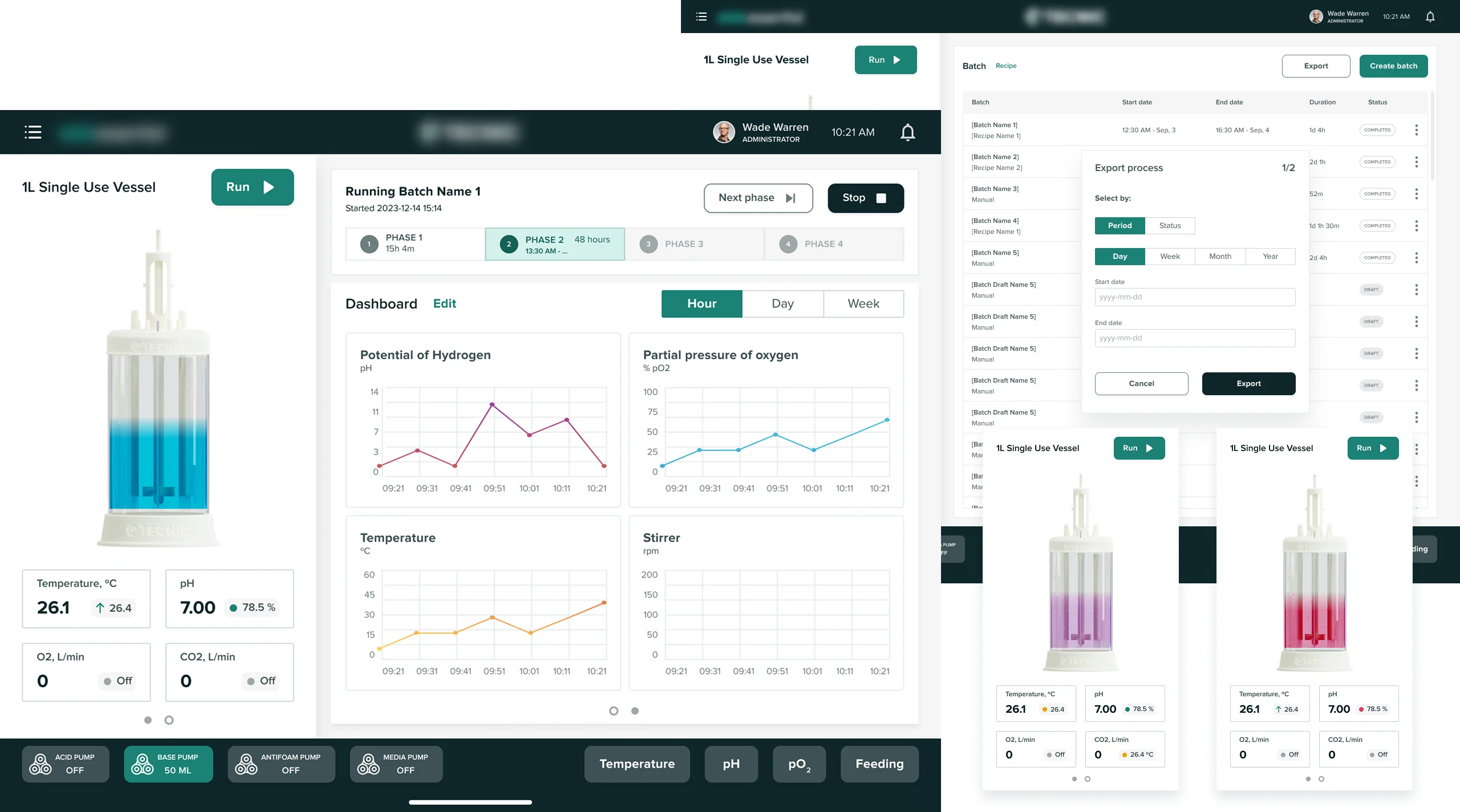
Software for a compact, user-friendly bioreactor with the essentials built in for worry-free operation — running batches, live process charts, recipe and phase management, on iPadOS in a working lab.

A safety-relevant context: an operator has to read vessel state, pump status and alerts correctly at a glance, often mid-task and at arm's length from the device.

Responsibilities
  • Full design cycle for the application — from concept and interaction design to developer-ready specs and visual communication.
  • UI kit and component library spanning accounts, user management, dashboards with charts, and process and recipe management — one consistent system across every section, reinforcing brand recognition.
  • Research and rationale — stakeholder interviews, desk research and competitive analysis; design decisions grounded in established UX laws and principles and in Apple's iPadOS Human Interface Guidelines, adapted to real laboratory and device conditions.
  • Micro-interactions and alert states for vessels, pumps, errors and danger signals — instant, unambiguous feedback that directs attention where the system needs it.
  • Clickable prototypes for developer and stakeholder demos and for exhibitions — supporting sales under tight MVP deadlines.

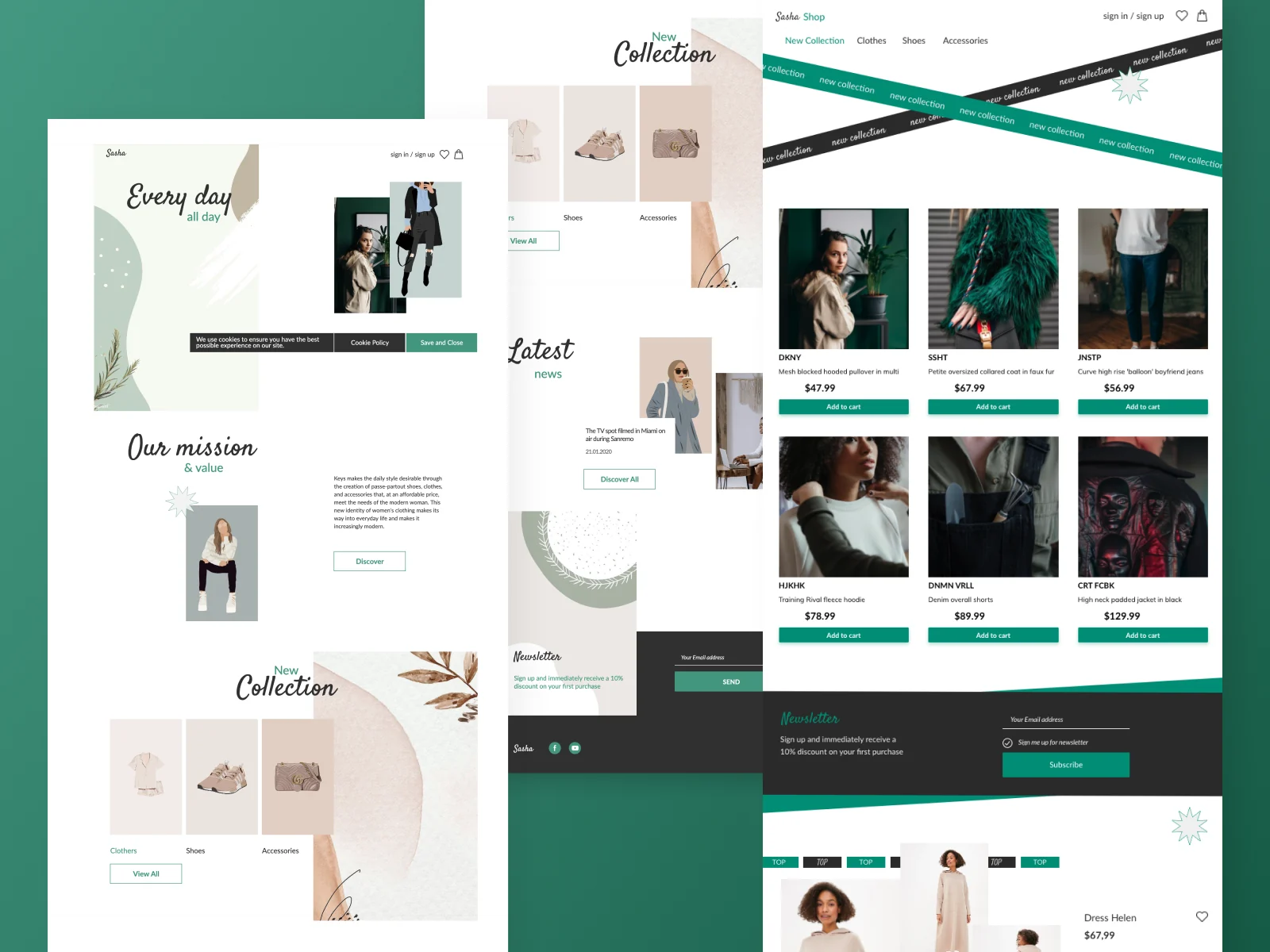
The platform helps companies deliver highly personalized experiences that increase engagement and lead to higher conversions: white-labeled popups, chatbots, FOMO, FAQ and onboarding tooltips with precise targeting at scale — plus high-converting personalized landing pages and an easy-to-use email builder.

I designed the tools other people design with — every component ships onto someone else's site, in someone else's brand, so defaults, presets and constraints have to do the design work.

Responsibilities
  • Full-stack product design — from analysis to clickable design — plus the marketing side of the same business.
  • Design system for a white-label product — components that stay coherent under any client's brand, where presets and considered defaults safeguard output quality regardless of the end user's design experience.
  • Several projects in parallel under tight deadlines — highly impactful work with wide reach across client sites.
  • Product validation through hands-on use — producing real campaigns, landing pages and email templates on the platform served as continuous usability testing of the platform itself: defects and friction points were documented as bug reports and improvement requests for the development team, and the findings informed revisions to templates, presets and default settings.

A large, multi-level portal for collecting and delivering information and news — with tools for user interaction, publication search, mailing lists and databases.

An enterprise system where the challenge lies less in the visual layer than in the number of scenarios, roles and content types that have to coexist within a structure that stays navigable.

Responsibilities
  • Translating complex platform and user scenarios into intuitive, high-quality interfaces for enterprise software.
  • UI kit, style guide and component library — audited and rebuilt the existing colour and text styles into one system to hold product consistency.
  • Information architecture and navigation for a deep, multi-level structure — improving findability and overall accessibility.
  • Marketing materials, illustrations and email templates, keeping brand recognition consistent across all products and platforms.
Most enterprise work is covered by NDA, so these cases show the scope, the approach and my role rather than the confidential material behind them. Happy to talk through the thinking in more detail — just get in touch.
02

Process

01

Verify before design

Task premises are checked against the product, API and data before design work begins. Incorrect assumptions are challenged with evidence rather than implemented as written.

02

Research & audit

Domain and desk research, competitive analysis, UX audits with Problem → Solution framing. Findings are delivered as a prioritized quality backlog rather than a presentation.

03

System first

Components, tokens and patterns before one-off screens. A consistent library is what genuinely accelerates the team — and keeps quality stable under deadline pressure.

04

Prototype & test

Clickable prototypes — Figma or AI-generated interactive HTML — tested in moderated sessions. Concepts that do not hold up are discarded at this stage, before they reach development.

05

Spec & ship

Definition of Done: all component states, empty / error / loading, edge cases, adaptive behavior, copy and validation specs. No unresolved flows left for developers to interpret.

06

Measure & iterate

Post-release checks against the audit, honest metrics ownership and data-driven iteration. Results get reported as they are — including what didn't work.

AI × Design

AI doesn't replace design judgement — it removes the routine. I operate AI as a daily production tool: prototypes, mockups on real design-system components, design QA and task automation — with the same quality bar applied to AI output as to human work.

Figma → interactive HTML in hours

Single-file clickable prototypes generated from Figma via Claude + Figma MCP — used in real moderated usability tests instead of static mockups: onboarding flows, navigation concepts, monitoring A/B variants, device flows. Now the default for anything that needs testing, not a special occasion.

Design system, machine-readable

Rules files and full token exports (palettes, typography, elevation, spacing) for both web and mobile component libraries — so AI agents assemble screens from real components, not lookalikes. A well-structured design system is AI infrastructure now: it's what makes generated output usable rather than something to clean up afterwards. Practice documented and scaled to the whole team.

Task → prompt → mockups in Figma

A working pipeline where a backlog task becomes Figma mockups built on actual design-system component instances — with human design review as the quality gate before anything ships.

Automation skills & prompt library

Custom AI skills for the routine: writing design and dev tasks, pixel-perfect design QA against Figma, UX digests for the team — plus a reusable prompt library so the whole team benefits, not just one designer.

Backlog task→ Claude + Figma MCP→ Mockups on real DS components→ Interactive HTML prototype→ Usability test→ Design review & ship
03

Experience

Mar 2025 → Present
GurtamLead UI/UX Designer

B2B SaaS fleet management & telematics — a global platform (web and mobile products) alongside a 20-year legacy system. Led design through the platform's public launch: pre-release UX/UI audit turned into a prioritized backlog, legacy redesigns, new modules, consolidation of seven design libraries into one, research practice and hiring. Work across product definition and requirements with product management and business analysis, carry design review through to the built product, and own the AI-assisted design workflow adopted by the wider team.

Nov 2021 – Mar 2025
SaM SolutionsSenior UX/UI Designer · project role: Lead Designer

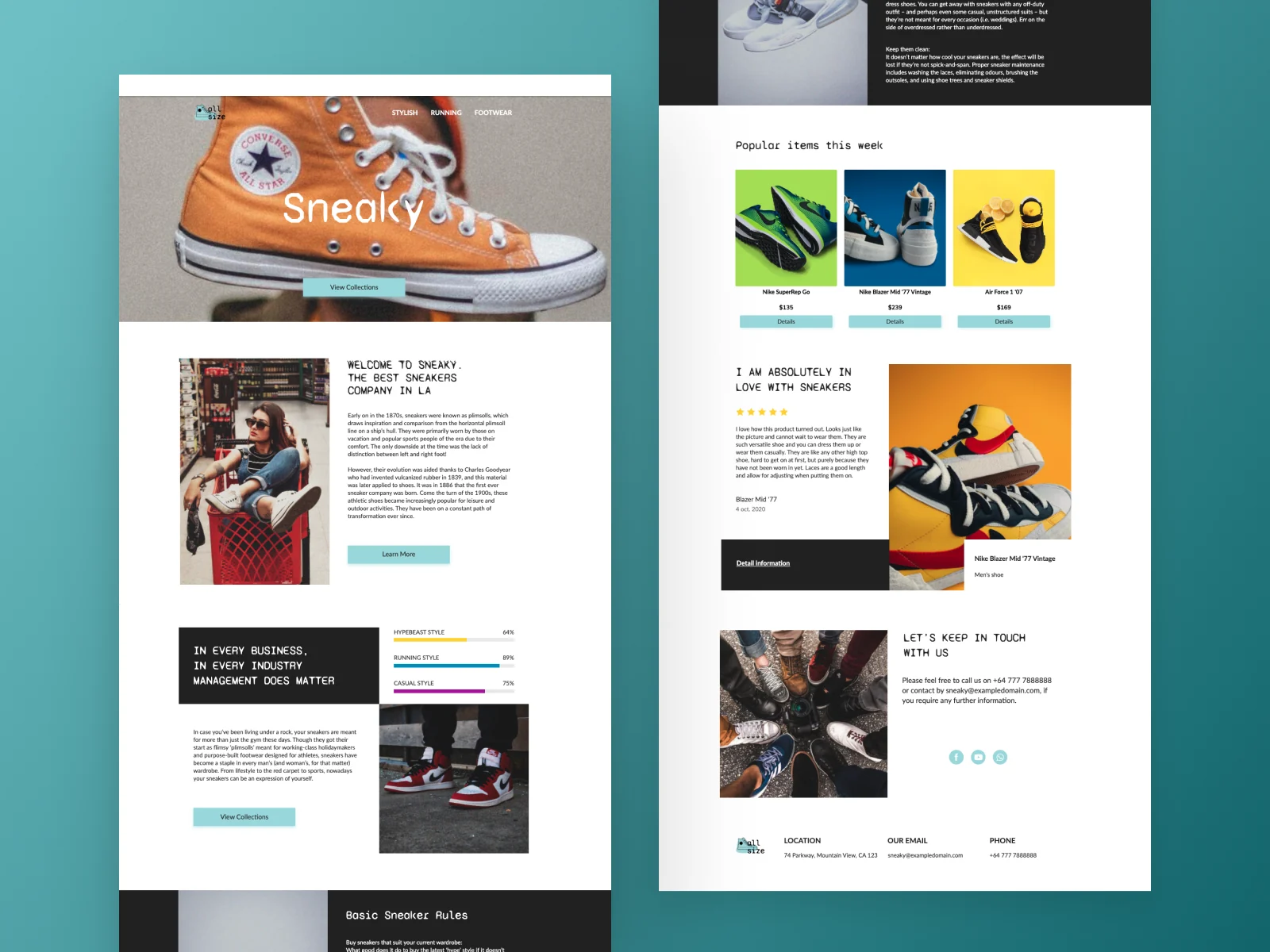
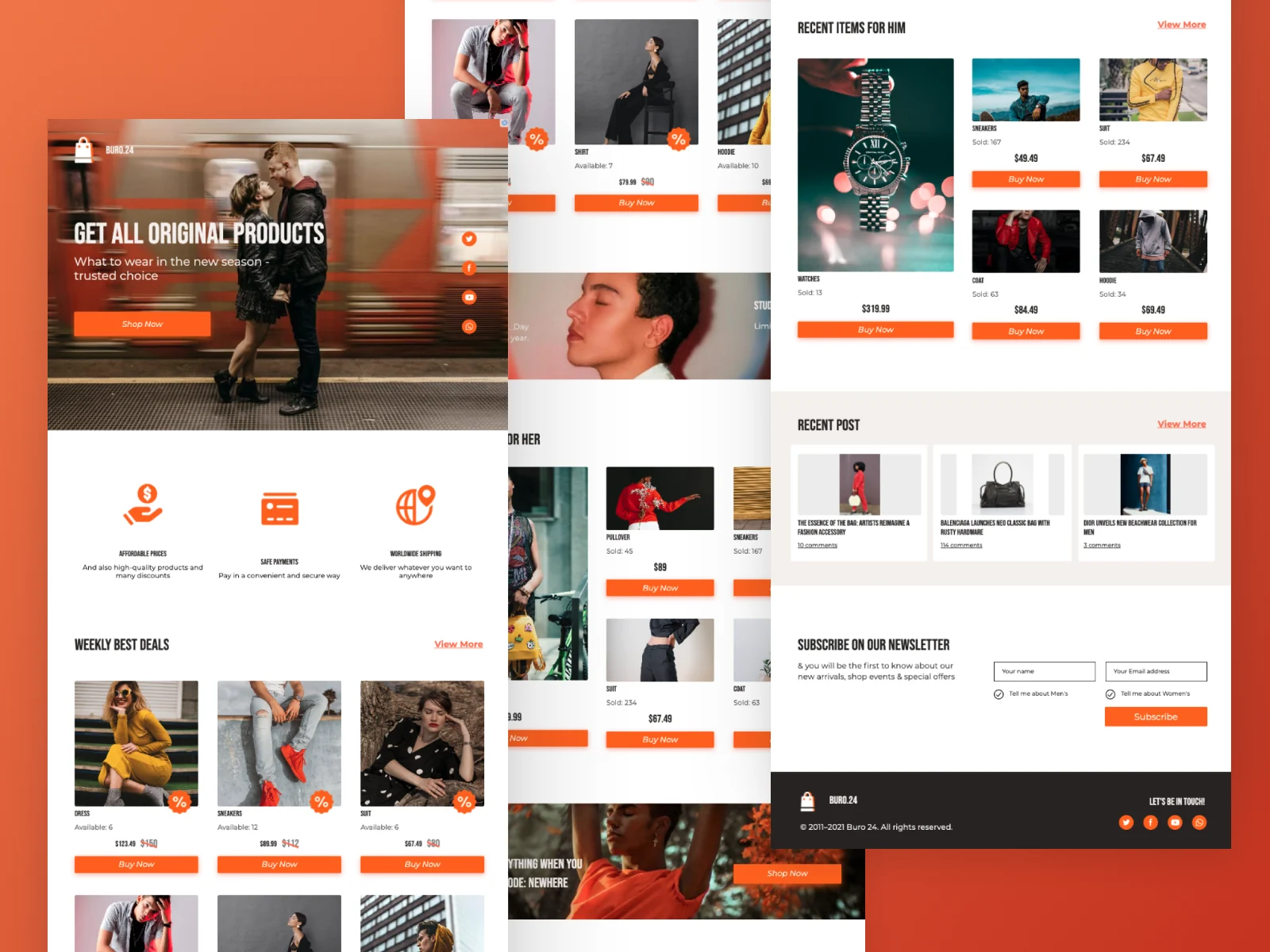
Product design for international B2B clients: a global flexible-workspace marketplace, industrial lab & bioprocess software, retail and furniture-industry platforms. Owned the shared product experience across four acquired marketplace brands, defined cross-product design foundations, and drove A/B-tested redesigns shipped across the group's markets.

Aug 2021 – Nov 2021
HiQo SolutionsUX/UI Designer

UI kits and design systems for complex enterprise systems; presenting design solutions to customers and collaborating closely with development teams.

Jun 2020 – Aug 2021
FortvisionUI/UX & Product Designer

Martech platform: product design for white-labeled popups, chatbots, landing-page and email builders. Created and managed the design system, full cycle from analysis to clickable design.

Nov 2019 – Jun 2020
ABC MobileUX/UI & Creative Designer

Websites and mobile applications: competitor analysis, user flows, wireframes, interactive prototypes, visual design, motion graphics; hands-on HTML5/CSS3.

2018 – 2019
FreelanceUX/UI Designer

Independent UX/UI design work for early-stage startups and small businesses.

04

Expertise

Product Thinking & End-to-End Design

Owning a product area from business goal to shipped flow and beyond it: framing the problem, prioritizing what actually matters, making trade-offs explicit, then improving the result on feedback, analytics and product data once it's live. Web & mobile, B2B, B2C and SaaS. Data-heavy interfaces: dashboards, monitoring, tables, analytics. Wireframing, UI prototyping, interaction design, interface animation, UI copy. Strong composition, typography & grid fundamentals.

Design Systems & Scalable Architecture

Pattern architecture built to hold across brands, markets and releases: component logic, states and rules, design tokens, Figma variables & variants, Storybook alignment, design QA. Consolidating fragmented libraries into one reference system. Legacy platform audits with prioritized, developer-ready improvement backlogs.

User Research & Testing

Moderated usability testing (facilitator / notetaker protocols, A/B prototype rotation), IA & survey research, competitive analysis, A/B testing, UX psychology (laws, principles, biases), user journey maps, data-informed iteration.

Leadership & Cross-Functional Ownership

Leading a design team while staying hands-on: directing and supporting designers, hiring (JD → whiteboard challenge → scoring), design reviews before and after development, Definition of Done for design, quarterly planning. Working across product definition and requirements alongside product management and business analysis, and driving adoption of shared standards through influence rather than mandate. Close collaboration with PdM, BA and engineering in Agile.

Technical Collaboration

Supporting implementation quality end to end: Storybook aligned with Figma, machine-readable design-system rules and token exports, implementation guidelines and documentation for engineering, and design QA against the built product. Review practices that hold UX quality through delivery, not only before it — with a hands-on HTML/CSS background behind the conversations.

AI-Assisted Workflow

Claude + Figma MCP prototyping (Figma → interactive HTML), prompt engineering, machine-readable design-system rules and token exports for AI agents, AI design-QA automation, reusable skill/prompt libraries for the whole team.

Standards & Accessibility

WCAG 2.1 AA and the European Accessibility Act, Apple Human Interface Guidelines, Material Design. Accessibility built into the design library — not patched on after release.

05

Education

2021
Google UX Design CertificateCoursera

Design process, user-centered design, accessibility, equity-focused design, UX research, usability testing.

2020
DesignSpot School (EPAM community)Experience Designer

UI patterns, user flow, tables, visual design, responsive design, mobile interfaces, design systems, dashboards.

2018 – 2019
Educational Center of HTPUX/UI Design

Mobile app design, adaptive design, prototyping, impact mapping, user flow, information architecture, HTML, CSS.

2018
School of Design "Hands" · HTPDesign Start · Web Technologies Basics

Graphic design, Adobe Photoshop & Illustrator; HTML, CSS, JavaScript, Bootstrap.

2003 – 2012
Belarusian State University of Culture and ArtsMA in Cultural Studies · postgraduate research

The academic grounding behind the systems thinking — and behind the teaching and mentoring side of the design work.

Thank you

Natallia Lisouskaya
Senior Product Designer · Hands-on Design Lead
Based inVilnius, Lithuania
LanguagesEnglish — professional (daily working language) · Belarusian — native